
Hello.
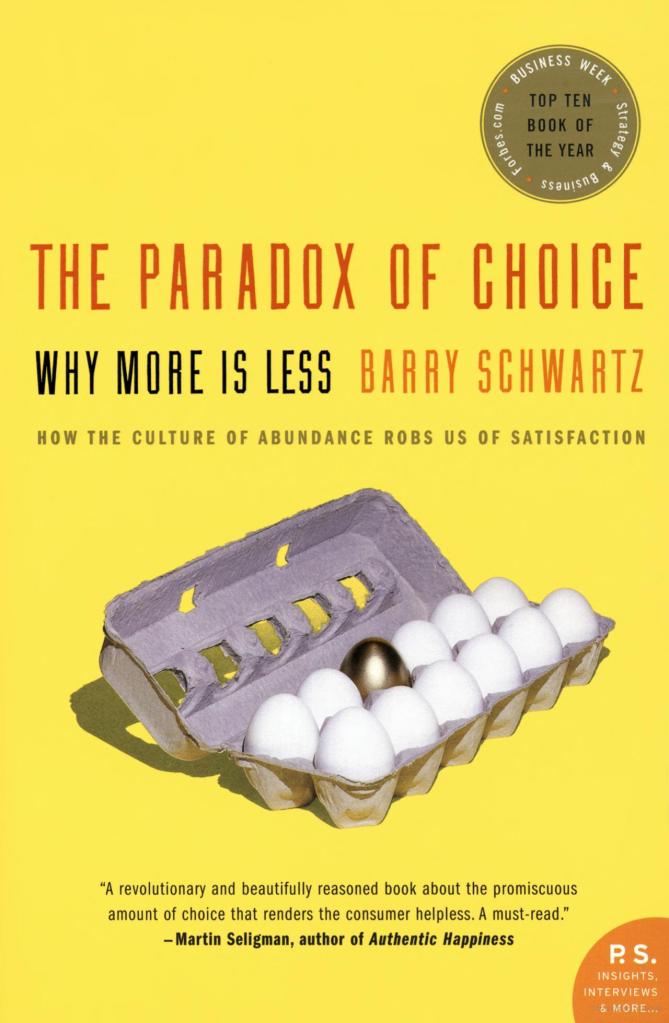
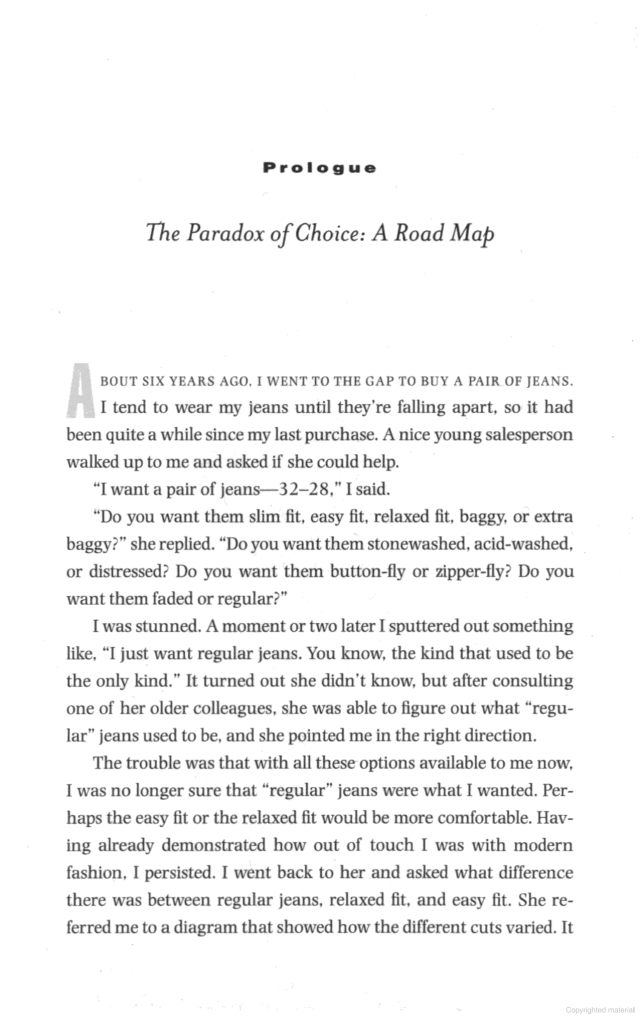
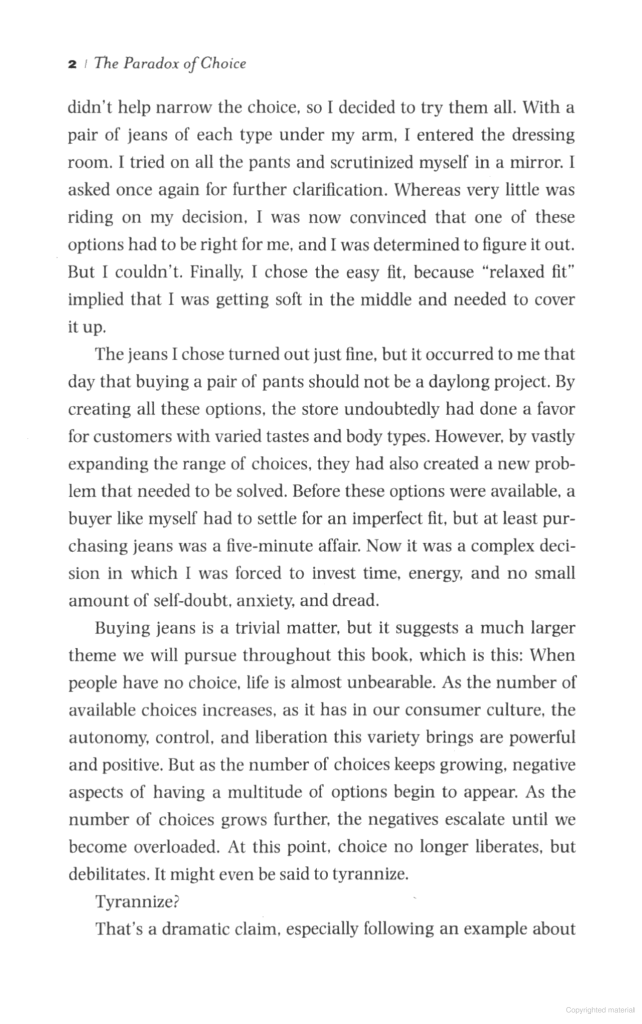
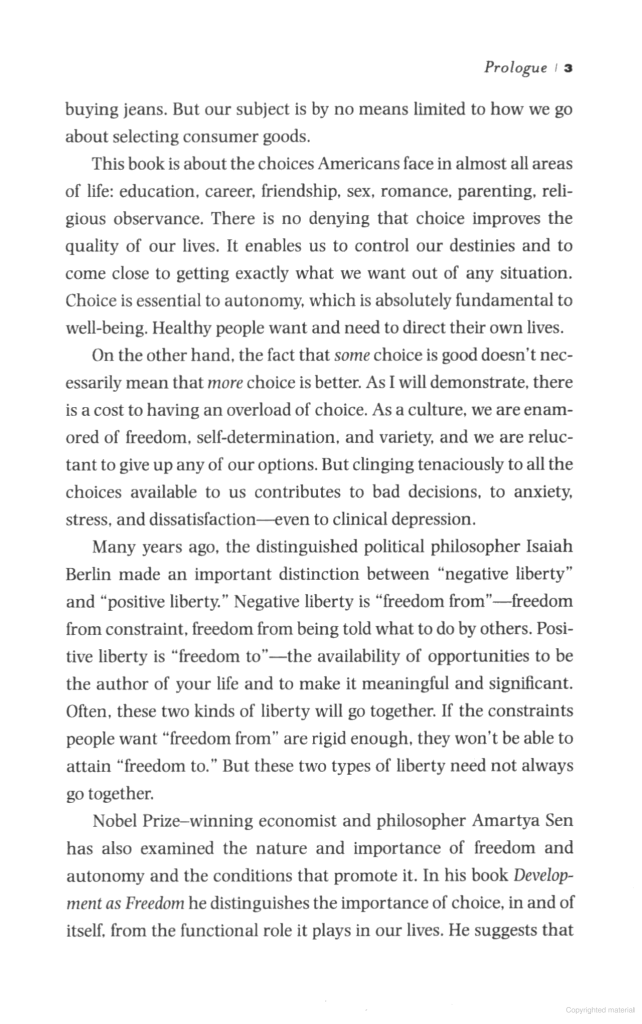
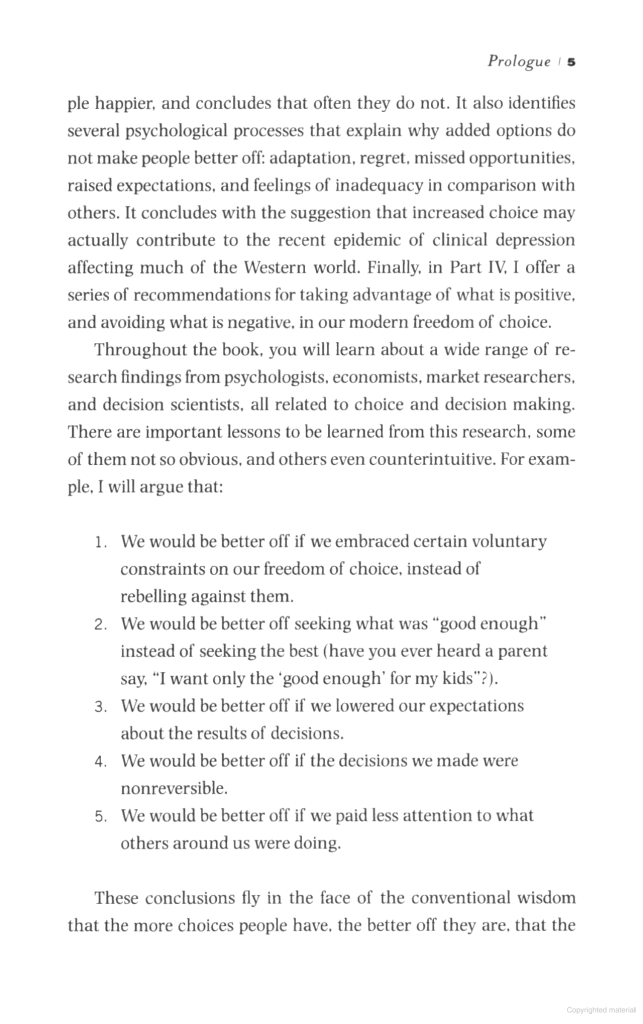
I wanted to go over a topic that is probably more well known than you’d think. I’ve seen it thrown around in social media and brought up in conversation, though most that do don’t understand the extent to which it can affect our lives. It’s called the Paradox of Choice. Coined by psychologist Barry Schwartz in his 2004 book The Paradox of Choice: Why More Is Less (I left a small preview under this block), the concept describes how, contrary to common assumptions, having too many choices can be overwhelming and detrimental rather than empowering. Modern life gives us an unprecedented amount of freedom, ranging from what we wear to what career we pursue. However, this comes with an unexpected side effect: choice overload, and in turn, a sense of regret.

THE LIMITS OF FREEDOM
From a psychological standpoint, the paradox of choice rests on the idea that, while freedom to choose is typically seen as a good thing, there is a tipping point where too much choice leads to anxiety, indecision, and dissatisfaction. But why does this happen? Much of it boils down to two concepts: opportunity cost and regret.
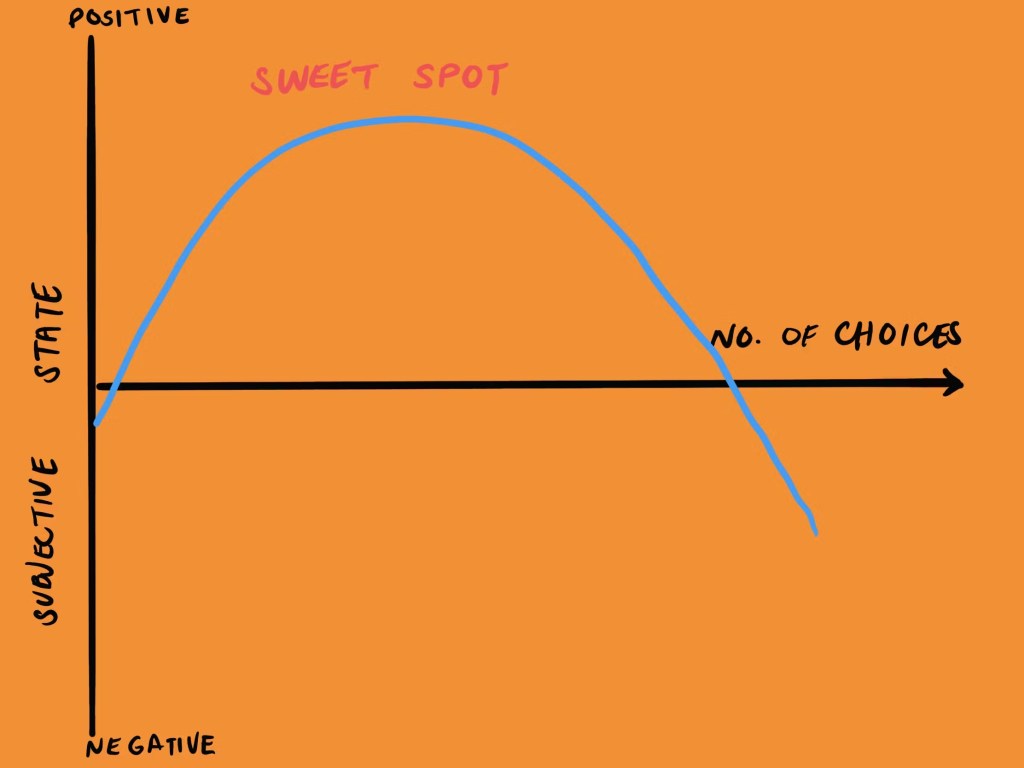
When we face a plethora of options, each choice we consider is weighed against every other possible option, creating a mental toll as we imagine all the possible benefits we could be missing. As Schwartz found in his studies, our minds tend to focus more on what we didn’t choose than what we did, leading to regret and dissatisfaction. In situations where we can freely choose (which we often equate with greater happiness), we might ironically end up more anxious and less content. Freedom in excess, it turns out, can become a burden.
OUR CHOICES IN LIFE
Let’s imagine a simple scenario that applies the concept into everyday life. When you’re handed a vast menu with countless options, it can feel empowering at first. But with each option you consider, you might begin to feel uncertain, questioning your decision and wondering if something else might be even better. Even after ordering, it’s easy to second-guess yourself, which can diminish the pleasure of your meal, a feeling that I’ve dealt with multiple times. Schwartz and his research team found similar effects in studies examining consumer choices, revealing that people tend to feel more satisfied when there are fewer options to choose from.
Another study examined the purchasing habits of shoppers confronted with a wall of jam jars, offering 24 types in one setting and only six in another. The results were telling: while more shoppers stopped to sample from the wide selection, fewer actually bought a jar compared to the group presented with only six choices. The people with fewer options seemed to be less overwhelmed and thus more decisive.
MORE IS LESS
The effects of choice overload go beyond consumer decisions. In relationships, for instance, people may feel a similar anxiety due to the perceived availability of other potential partners. This abundance of choice can lead to hesitation or even fear of commitment, as individuals might wonder if there’s someone “better” out there. As with shopping, this abundance can result in greater dissatisfaction with what we choose, even if the choice would have been fulfilling on its own.
The paradox of choice even extends to career paths, where endless possibilities can create paralyzing indecision. When we get piled on with many career choices, it may be hard to struggle on a singular path. The fear of choosing just one can cause us to believe that we give up on the potential of all others, creating a feeling of restlessness or unfulfillment that overshadows achievements in what we choose to pursue.
CULTIVATING CONTENTMENT
Is there a solution? It starts with being mindful of our approach to choices. “Satisficing,” or aiming for a choice that is “good enough” rather than perfect, can help reduce the stress of decision-making.. By taking our mind off the negative outcomes, we can take a decision at face value and focus on what we actually want to choose. There’s a certain balance that needs to be maintained to retain autonomy. It might seem contradictory, but it really is true that TOO much freedom is mentally taxing. Acknowledging that the paradox exists
Practicing gratitude can also shift focus from what we didn’t choose to what we have, reducing feelings of regret. By cultivating gratitude and limiting our exposure to excessive choices-whether in shopping, relationships, or other life areas-we can find greater peace in our decisions.
I thought it would be helpful to share this insight since the paradox of choice is something we often experience without realizing it. Having an awareness of this tendency can free us from the weights that decisions can hold on us. I’m not saying that’s easy; it’s almost impossible to completely eliminate the thought of “what could’ve been” from our minds. However, despite that, I think it’s worth encouraging yourself more than anything to embrace the existing path that you chose to take rather than the fictional ones that you did not.
 ElysianState
Leave a comment