
Hello.
It’s almost Thanksgiving weekend and I have multiple exams coming up this week- I didn’t have much time to search for a topic to research. Instead, I thought of something that I felt that I’d dealt with in the past and wanted to go through my experiences with. This post may not be as long as my previous ones.
Sometimes it seems to me that no matter what I do, I feel that it’s not sufficient. For example, I got what I’d say is a pretty good math grade in hindsight. Still, I remember clearly in the moment thinking of multiple ways that it could have been better. If I compare it to my math grades last year, it’s actually a substantial increase. Despite that, I remember ending the last marking period pressuring myself to do better this one.
Psychology has become a pretty volatile class for me. It feels like I either do great or far below my standards on assignments or tests. I actually have one coming up tomorrow. On my previous two tests, I finished with what I considered a good grade on both. Yet, there’s still a part of me that thinks that on any one of these upcoming tests, I might be “exposed” and perform poorly. It’s hard to describe exactly what I mean by that, but the way I’d put it is that I feel like I’ve gotten lucky by getting good grades in the past.
And that’s wrong, isn’t it? I got grades that even I knew were good. I have evidence of success right in front of me and still I feel that its inadequate. There’s a term for this – Imposter Syndrome. It’s basically what I just explained above: a persistent feeling of self-doubt even after you’ve accomplished something. Perfectionism plays a key role in this. I don’t hold myself to extremely high standards all the time, but when I do, it’s easy to feel that I’m a failure if I fall short. There’s the fear of exposure, too. What if people around me find out that I’m not actually that competent? Being afraid of things like this can cause overworking to compensate for inadequacies that can be perceived on your own. I think it goes without saying that having a mentality where nothing you do is good enough isn’t a good thing. I thought for a long time that I was just motivating myself to work harder, but pushing yourself down is only going to weaken your mental health and make you LESS motivated to do the things you want to do.
ORIGINS
I don’t want to point fingers, but often a lot of blame falls on parents. It’s stereotypical to see parents as believing their children are going to accomplish an unrealistic amount of things, but it’s true that their expectations can conditional praise can cause children to develop chronic self-doubt. Culture plays a role there too. If you feel out of place, like a first-generation student, the additional pressures might amplify your issues. I mentioned academics before, but if you’re studying at a super competitive school it would likely be even worse.
You’ll find that a lot of psychological issues are a result of our ancestors passing something onto us that no longer helps us. It’s been speculated that imposter syndrome might have evolved as a system that would serve as checks against overconfidence, increasing caution and collaboration in early society. Obviously, this doesn’t help us as much today and likely overfires more than not.
Then there’s social media. I don’t like pointing to it as the sole cause of mental issues as many like to do, but it’s really undeniable that it promotes a standard of life and person that isn’t realistic. It’s really really easy to compare yourself to what you see on social media when that might not be real at all. In fact, you’re usually only seeing the successes on media while completely ignoring the struggles that they went through as well.
VARIANTS
According to Dr. Valerie Young, cofounder of Imposter Syndrome Institute, there are five types of imposter syndrome.
- The Perfectionist: Those who believe anything less than being flawless is a failure.
- The Superhero: Those who believe that they need to excel in all areas to prove their worth.
- The Natural Genius: Someone who struggles with tasks that don’t come easily and see difficulty as a sign of inadequacy.
- The Soloist: Those who avoid asking for help, believing that it reveals incompetence.
- The Expert: Someone who feels like they’ll never know “enough” to actually be competent.
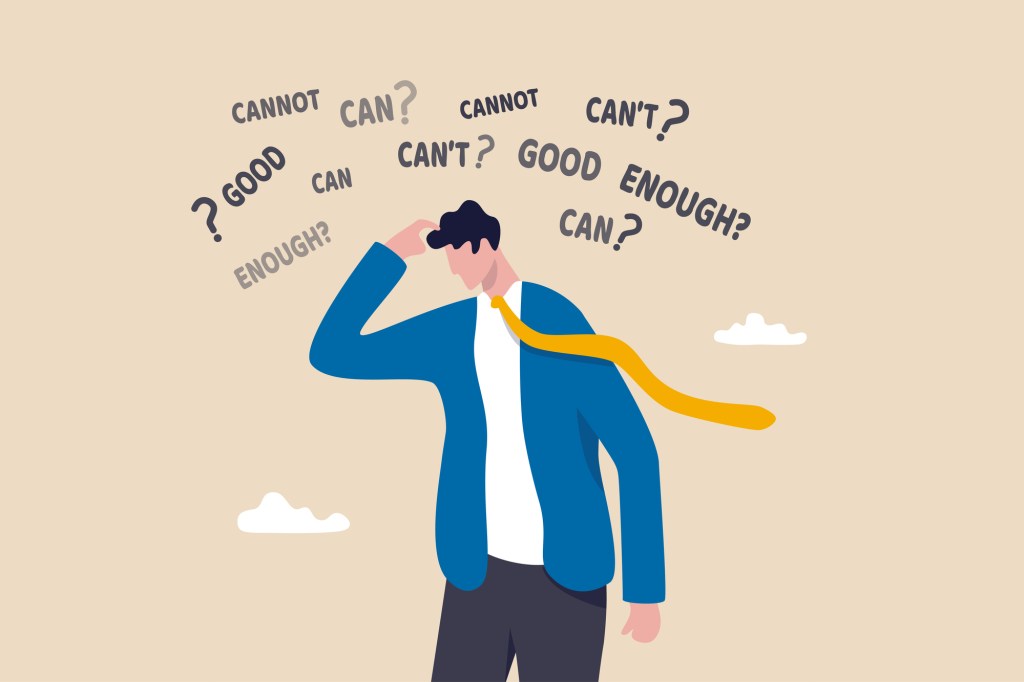
Do you see yourself in one of these? It might be that you’re struggling from imposter syndrome. As usual, I’m not an expert and there isn’t an exact “cure” as it’s not really a mental illness, but there’s ways to try and counteract it. For me, the first step was to acknowledge and recognize the pattern when I would have thoughts of self-doubt. Once you notice it, I would tell myself that it wasn’t a fact at all.
Change the way you approach success. Don’t think that you succeeded because of some outside factor or luck. Tell yourself that you worked hard and earned what you deserved. Find evidence proving that you’re capable. To that extent, it might be helpful to make a physical “success journal” where you can record accomplishments, compliments, or positive feedback. Refer back to that whenever needed. And as always, it’s helpful to talk to someone if you think they can give you the tools you need to combat negative self-perception.
Imposter syndrome is a universal struggle present in people in all aspects of life, even the most accomplished. A harsh inner voice can perpetuate self-doubt, especially those that are reinforced by early experiences or external biases. Despite everything it’s possible to silence the inner critic and embrace your own value and competence.
We make progress before we perfect. Accept your mistakes as a part of growth and success.
 ElysianState
Leave a comment