Hello.
I want to apologize again for taking another break from posting. I’m actually working on a research project related to this subject and had a lot of time committed to that over the last couple of weeks. That being said, I’m glad to have this post out by today.
I mentioned last week that I was looking into Narcissism Personality Disorder (NPD), which actually has a lot less research on it than you’d think. In fact, the cause of NPD is still only speculatory. If you don’t know what narcissism is, it’s associated with individuals displaying confidence, charm, and most importantly, an inflated sense of self-importance. However, the critical part of narcissism is what lies beneath this, allowing narcissism to manifest in two different forms.
Grandiose Narcissism is what you might think of if you hear the word “narcissist”. It’s well-documented and is recognizable through high self-esteem, an inflated sense of superiority, and a lack of empathy. Imagine someone who constantly seeks attention and acts grandstanding. Manipulation is also a notable symptom of grandiose narcissism.
On the other hand, vulnerable narcissism is much less visible, and while being equally significant, has much less research going towards it. Unlike grandiose, vulnerable is associated with fragile self-esteem, a fear of rejection, and emotional volatility. Behaviors that may be indicators include passive-aggressiveness, withdrawal, and harboring resentment when they perceive criticism or rejection. I wanted to dive deeper into vulnerable narcissism specifically, since I feel that grandiose narcissism is pretty self-explanatory and already has a lot of research existing.
FACES
One of the most important things to know about vulnerable narcissists is that they are often preoccupied with feelings of inadequacy and are extremely sensitive to things that they perceive. It’s not just an inflated ego that causes this but also an internal struggle that they believe protects themselves from further pain.
Existing research suggests that vulnerable NPD may result from early experiences in life. While not confirmed, experiences involving neglect, criticism, or overprotection have been thought to create a fragile sense of self-worth and notably increases sensitivity to rejection. Your status also seems to push you deeper down the form of NPD that you deal with, as NPD seems to “encourage” further traits of narcissism. NPD may start at a young age, causing you to deal with these emotions early on. This carries later into life where many have extremely volatile emotions. Think about it: if your two main emotions, self-entitlement and self-hatred were so far apart, swapping between the two would almost always result in a dramatic shift in the way you act. Take this a step further, and relationships with other humans are difficult to manage because of this.
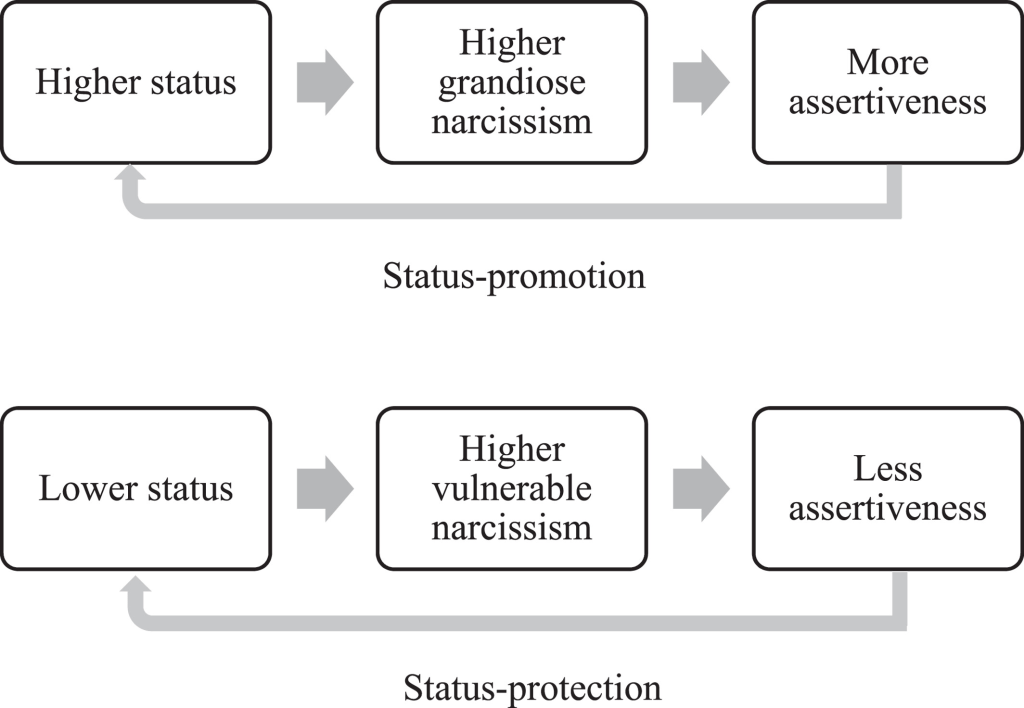
Grandiose narcissists may seem resilient through their self-entitlement, but there are multiple links from vulnerable narcissism to mental health issues such as depression, anxiety, and social phobia amongst others. Because of their internal turmoil, vulnerable narcissists often struggle to deal with these as well. When dealing with issues in the real world, they often stray away from the spotlight and instead of seeking validation in overt ways, tend to engage in passive-aggressive behavior or subtly manipulate their environment to gain affirmation.
DISTINCTIONS
If you want to help those dealing with NPD the most important thing to know is which type they’re dealing with. To create healthy relationships and provide effective therapy, vulnerable narcissists may benefit from procedures such as:
- Cognitive Behavioral Therapy – this deals with maladaptive thought patterns and improves emotional regulation.
- Compassion-Focused Therapy – this would help them develop self-compassion and importantly reduce feelings of shame.
- Interpersonal Therapy – this helps enhance social skills and improves their ability to form meaningful connections.
However, vulnerable narcissism is often overlooked in society as the term “narcissism” goes hand in hand with only grandiose NPD. The media often portrays narcissists as brash, self-absorbed characters while ignoring the quieter, more introverted characteristics of the trait.

There’s a sense of “bias” that wants to display all narcissists as grandiose, and this only harshens implications for vulnerable narcissists. One of the most important ways that this happens is through underdiagnosis. Vulnerable narcissists already avoid attention, making them unlikely to seek help or be identified. With narcissism misunderstood and underdiagnosed, their behaviors are often mislabeled as signs of shyness or moodiness, leaving their important struggles unaddressed.
And when these struggles are left unaddressed, they only worsen. Vulnerable narcissists are likely to experience anxiety, depression, and social phobia, like I mentioned before. These issues all stem from their internal conflict and when left alone, those with it may never even find out that they have NPD.
RESEARCH
I mentioned that I was working on a research project involved with NPD. While doing so, I took a glance at existing research and insights into vulnerable narcissism. Like I said, there isn’t a definite answer as to why vulnerable narcissism manifests. However, there are insights onto the possibilities of it.
Take neurobiological links, for example. Some studies showed that narcissism was associated with heightened activity in the amygdala, which is involved with processing fear and emotional stimuli in the brain. Cultural contexts, which actually have an influence on personality, also could play a role here, research indicating that collectivist cultures, for example, could suppress grandiose traits while amplifying vulnerable ones because of their emphasis on humility and interdependence.
And of course, social media may play the largest role in total. Narcissism has risen in recent years due to the toxic nature that social media can place on mostly adolescents. In contrast to the over-self promotion of grandiose narcissists, vulnerable narcissists may engage in passive consumption or choose to post selectively, managing their image carefully.

I wanted to write this to drive more attention towards all forms of narcissism, straying away from the bias towards simply grandiose. Narcissism isn’t a one-size-fits-all trait. There is a stark contrast between its two forms and that itself is almost an epitome of the complexity of human personality and the need for nuanced perspectives.
If we can recognize and address the hidden struggles of vulnerable narcissists, we can create a greater sense of empathy and create a path towards effective interventions. Research has not found a “cure” or a way to completely prevent NPD. However, as it continues into the future, the most important concept is that understanding narcissism isn’t just about labeling behaviors at face value – it’s about recognizing the humanity, the multiple forms of it, behind them.
 ElysianState
Leave a comment