
Hello.
I didn’t realize for a long time just how much of our lives are based on the concept of “conditioning”. Behavioral psychology has provided insights on the way we learn and adapt to our environments. Two of the most significant branches of this are the concepts of classical and operant conditioning, introduced by Ivan Pavlov and B.F. Skinner respectively. The way we form habits, make emotional responses, and make decisions for ourselves can all be explained by these ideas. I wanted to write about the principles of the two and how they manifest in daily life today.
THE CLASSICAL APPROACH
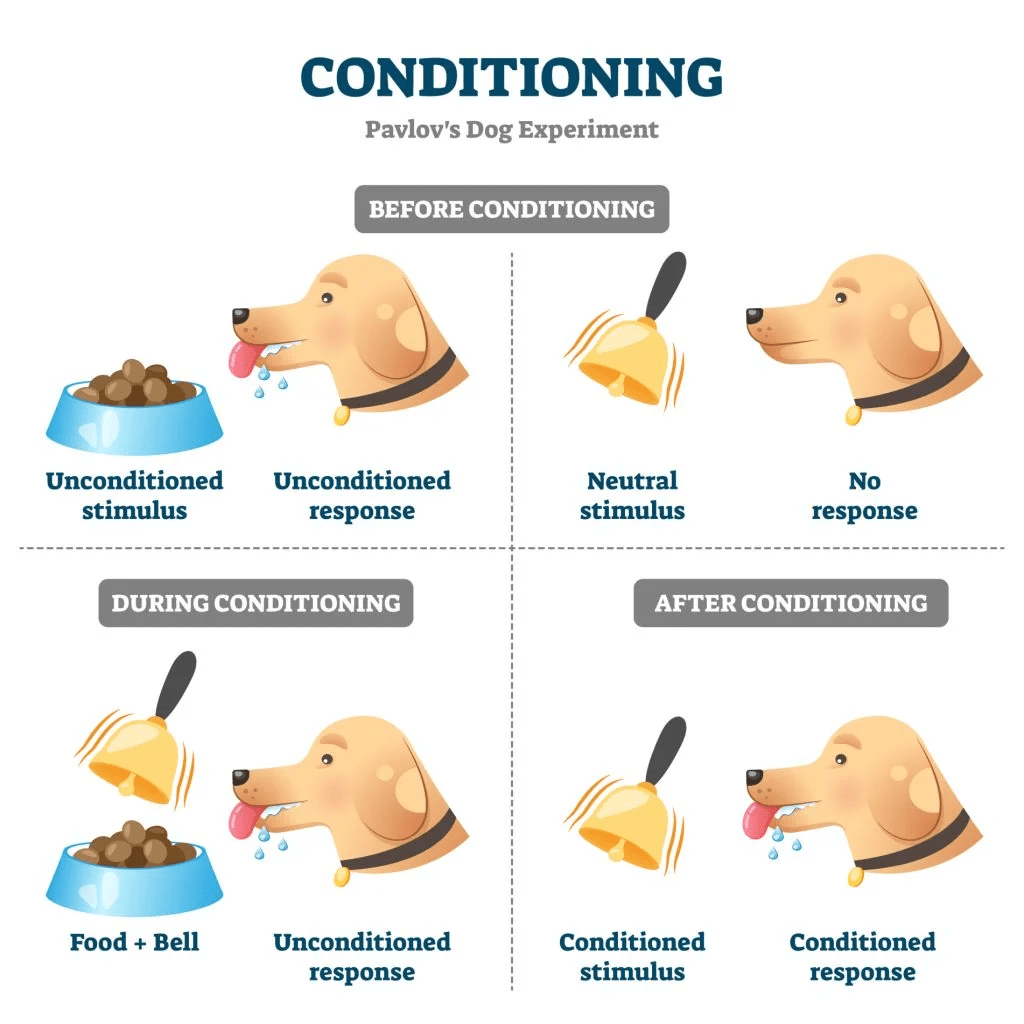
Operant and Classical Conditioning aren’t two differing theories on a specific process, but rather two different methods to teach a “response” in response to a “stimulus”. Classical conditioning is a learning process where a neutral stimulus becomes associated with a naturally occurring stimulus. Ivan Pavlov discovered this in his famous experiment with dogs.
While trying to collect saliva samples, he rang a bell to alert dogs that food had arrived. Interestingly, he found that dogs soon began to salivate to the sound of the bell alone. There’s four parts to this idea: the unconditioned stimulus, the unconditioned response, the conditioned stimulus, and the conditioned response. Simply, the unconditioned stimulus (US) and response (UCR) are naturally occurring, while the conditioned stimulus (CS) and response (CR) are “conditioned” by associated with the US and UCR. In Pavlov’s experiment, the unconditioned stimulus was the food that he brought to the dogs, paired with the unconditioned response, the dogs salivating. The conditioned stimulus was the ringing of the bell, paired with the conditioned response, the dogs salivating in response to the bell. The conditioned response is the salivation in response to the bell because the dogs would not normally salivate in response to the sound of the bell. By associating the sound of the bell with food, a conditioned response is created.
Now that you know the basics, it’s easy to see how it’s taken advantage of in everyday life. Take the world of advertising, for example. They frequently use classical conditioning in a subprocess called evaluative conditioning. By pairing a product with uplifting music, attractive models, or heartwarming imagery, a subconscious association between the product and those positive feelings is created. Evaluative conditioning involves pairing things with strong emotions, positive or negative, to associate those emotions with another stimulus (in this case, the product). This can cause consumers to purchase a product without rational deliberation.
Or take food, for example. Many people create positive memories through eating, such as a dish on a special occasion, which can lead to a lifelong affinity for that food. On the other hand, even a single instance of food poisoning can lead to a strong hatred for a food, in what’s called conditioned taste aversion. It actually represents an odd exception in the idea of classical conditioning that I won’t go into, but involves the idea of biological constraints on conditioning.
Phobias are another prominent result of conditioning. For example, child who is startled by a barking dog may end up associating the sound or sight of dogs with fear. This is almost exactly what happened in the Little Albert experiment, where a baby was conditioned to fear a white rat by pairing the rat with loud noises. Interestingly, Little Albert became afraid of other furry or white objects as well, in what’s called stimulus generalization. In the exact opposite, called stimulus discrimination, you may fear only exactly what you were conditioned to instead of related stimuli. If you still can’t see it, even small triggers, like the smell of coffee reminding you of the morning, or an alarm making you feel alerted all represent this same concept.
THE OPERANT APPROACH
On the other hand, operant conditioning involves teaching through consequences, or rewards. B.F. Skinner demonstrated that behavior could be shaped by reinforcements or punishments. Positive reinforcement involves the likelihood of a behavior by introducing a desirable consequence (reward) while negative reinforcement involves the removal of an unpleasant stimulus. Punishment, on the other hand, reduces the likelihood of a behavior instead.
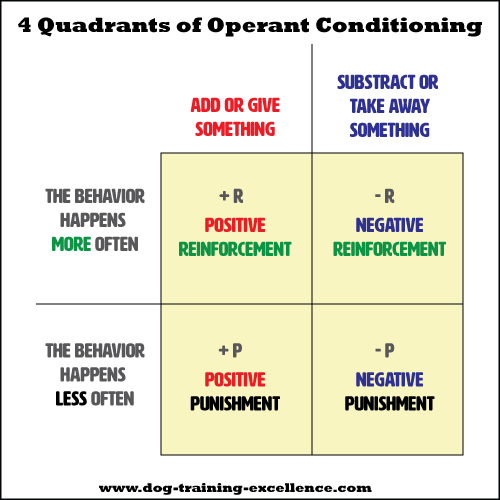
There’s everyday applications of operant conditioning as well. It’s a cornerstone of parenting and teaching strategies, for example. Imagine teaching a child to complete their chores by giving them praise or a reward. This is an example of positive reinforcement. On the other hand, you could remove privileges, such as screen time, to encourage better behavior. (negative reinforcement). Positive reinforcement is also used in the workplace. Bonuses, promotions, and incentives are all examples of positive reinforcements to increase productivity. Penalties, on the other hand, are examples of punishment, to decrease a behavior, such as missing a deadline.
To create routines and habits, operant conditioning is key. Rewarding yourself is an important source of motivation to continue doing something. Skinner found that when an action was not rewarded with a consequence, it could lead to the “extinction” of a response where one would be less likely to emit a response. Because of this, rewards (in moderation) are necessary to build strong habits until they begin producing rewards (like dopamine or endorphins) on their own.
Apps and platforms are also designed with operant conditioning in mind. Social media notifications, likes, and comments are all examples of positive reinforcement. The investment into social media, like losing a digital streak on snapchat, can also keep users returning. I watched a TED Talk on the “hook model”, which goes way more into this. I would recommend watching it if you have the time.
https://www.ted.com/talks/nir_eyal_what_makes_technology_so_habit_forming
COMPARISONS
If you still don’t get it, the main difference between classical and operant conditioning is that classical conditioning evokes an involuntary response through association of unrelated stimulus, while operant conditioning emits a voluntary response through the knowledge of positive or negative consequences. However, that doesn’t mean the two can’t go hand in hand.
For example, a student may feel a conditioned sense of dread when thinking about exams due to previous experiences. At the same time, they might study hard to earn good grades and avoid parental disappointment.
The two can both play a part in influencing us in everyday life, and if used correctly can benefit us as well. You can create positive associations with classical conditioning or break negative ones, or reinforce good habits through operant conditioning while punishing bad ones. If you can understand how both types of conditioning work, you’ll notice it almost everywhere around you. By recognizing those patterns, you can take it a step further, taking advantage to improve personal habits. Conditioning isn’t just a theory or idea in psychology, but like much else in the field, a practical tool that can be harnessed to create positive change.
 ElysianState
Leave a comment