Hello.
I found some time to put a post together, and the idea came to me while I was making breakfast yesterday. I’m no chef; in fact I barely know anything about cooking. But it seemed to me that whenever I managed to throw together a half decent meal it would end up tasting significantly better than it looked.
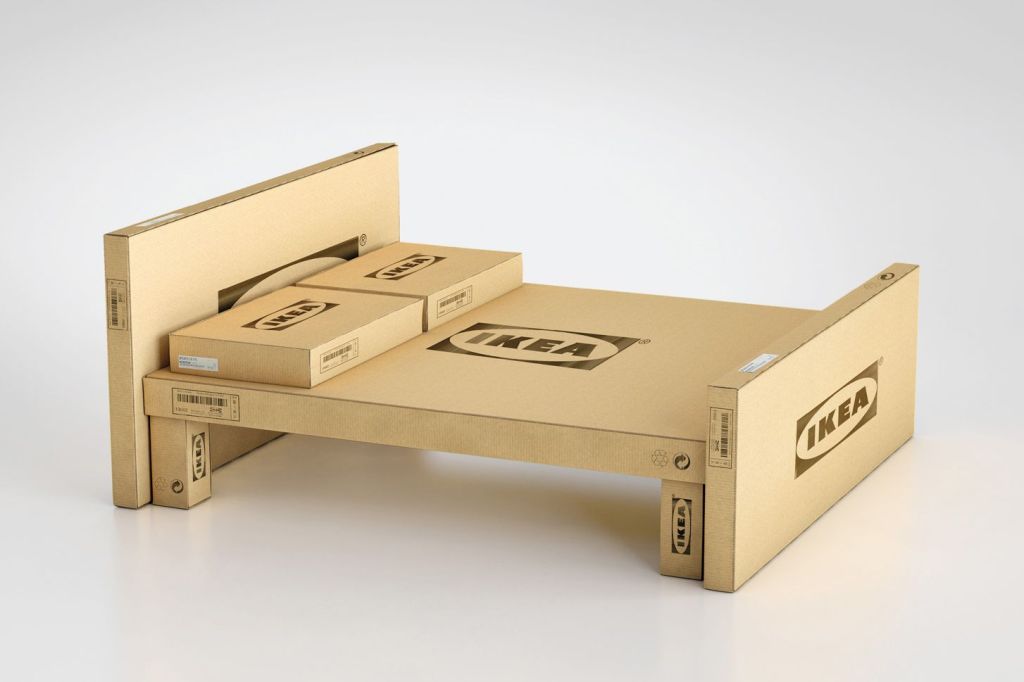
Was my food simply diamonds in the rough? No, I don’t think so, as much as I’d like to believe that it is. There’s actually a name for the idea that our brains tie the value of something to the effort that we put into it. I like thinking of Lego sets as an example. While seeing a large set someone else built may seem impressive, I always felt that looking upon my own creations had a different sense of pride and value that I couldn’t place on the other. I believe this effect isn’t tied simply to physical effort, either. Expensive food always seems to taste better to me as well; perhaps because of the effort needed to save money to afford it. The official name for the effect is the “IKEA Effect”, named after the furniture store.
BUILT TO MATTER
The IKEA Effect, fittingly named after the store where almost everything is assembled by the customer, is a cognitive bias where people place a disproportionally high value on products that they partially created. It was introduced by psychologists Michael Norton, Daniel Mochon, and Dan Ariely in 2011. In it, they explain that our minds rationalize effort by inflating the worth of things we work on. In addition, assembling something on our own gives us a sense of control over the product and an extra level of personal connection to it. It shifts our own role in buying the product slightly. We aren’t just buying the product. we’re participating. The discomfort that’s brought by extra time and effort being put into the product is resolved by assuming that the result must be valuable. The harder the work we put in, the more meaning we eventually assign to the result. If you’ve never felt this way from buying a piece of IKEA furniture (which I also have not), you may have felt that your own essays had more value than a teacher was placing onto them, or preferred the batch of cookies that you may have once helped your parents bake.
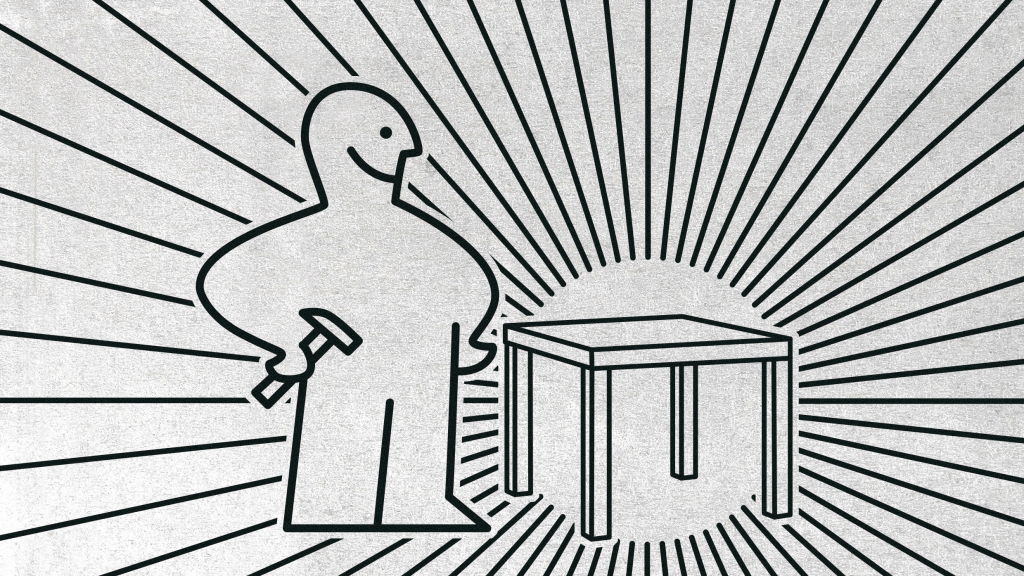
Because of the effect it can have on the consumer, companies have also learned to take advantage of the IKEA effect to its fullest. I brought up Legos before, but if you’ve ever been to a Build-A-Bear before, you may also notice that every step of the way there involves your own creations. These companies tap into the human desire to make something. Even when it’s only a small part of the actual process, letting customers create part of the product boosts satisfaction. That’s not saying that companies can just let customers completely create products from scratch. There’s a fine line between beneficial and harmful. If something’s too complicating or frustrating, the effect can backfire. If the consumer is made to feel overwhelmed the effort can turn into resentment instead of pride.
HIDDEN COSTS
There’s some pretty notable downsides to this for companies and for us in regular life that can result from the IKEA effect. For example, we can grow over attached to our work, leading us to reject valid criticism or cling to our own ideas just because they’re ours. In team settings, if everyone deals with this, individuals can push for their own suggestions instead of other, better options, just because they’re so emotionally invested into their ideas. And of course, simply being overconfident in your own skill can cause people to underestimate expertise in the field. Recognizing the effect in ourselves is just a reminder to balance pride in our work with perspective.
The original study by Norton, Mochon, and Ariely used simple build-it-yourself tasks like folding origami or assembling IKEA boxes to illustrate how labor inflated subjective value. Participants who built something consistently rated the product more favorably than those who simply observed or were given the same object, even if the final product wasn’t all that great. An important part of this was that the effect only held when people were able to complete the task successfully. If it was too hard to complete, the emotional reward was gone.

This ties us back to the most important thing to remember: The IKEA effect is not just about labor -it’s about meaningful labor. If a task feels pointless, too complex, or ends in failure, we no longer feel that connection. Further research explored how the bias played out in different domains:
In the workplace, employees who contribute more to a project are likely to believe that it’s the right direction, even when it’s not. This creates potential blind spots in decision making. In education and parenting, students who put effort into learning activities often feel more invested in their answers, which both increases confidence and resistance to correction. In entrepreneurship, founders tend to overvalue their products, potentially ignoring market feedback or pivoting too late. Their emotional attachment can then skew judgement.
Beyond individual behavior, it can also play a subtle role in social and political life. If you feel like you’ve “built” part of a system, like a community garden, a grassroots movement, or political ideology, they are more likely to defend it passionately. This fosters dedication, but also polarization. Effort reinforces belief, albeit at the cost of open-mindedness. It also has implications for consumerism in the age of mass customization. As companies lean into more personalization, through letting users change colors, choose features, or design their own products, they aren’t just selling goods. They’re selling authorship of the product, which allows us to invest a bit of ourselves, leading to reduced chances to switch brands, return items, or critically evaluate our choices.
We live in a world where convenience and instant gratification are around every corner. The IKEA Effect highlights something enduring regardless: the value of effort. It proves that building, crafting, or even struggling (to a certain extent) can make things matter more. However, at the same time, it also calls for humility. While it may feel so, just because we built something does not make it any better.
When you do eat your own food though, there is a quiet beauty in caring more just because we tried.
 ElysianState
Leave a comment