
Hello.
It seems paradoxical but our minds and our bodies seem to occasionally act in defiance of each other. This disagreement between our actions and our beliefs is called “dissonance”, and when it persists it can create discomfort within ourselves.
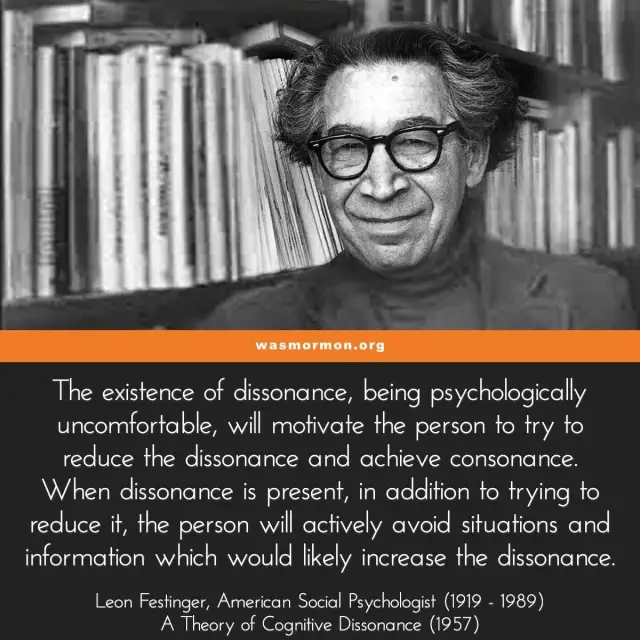
The specific term for this is called cognitive dissonance, coined by psychologist Leon Festinger in 1957. It’s not necessarily difficult to think of examples in life in which you know one thing is right, but do the opposite anyways. Take smoking for example. Most chronic smokers have some knowledge of the potential health detriments that it can cause, which in turn causes some mental discomfort. In turn, the smoker finds ways to resolve that discomfort through multiple methods such as justification (“The smoking relieves my stress.”), denial (“Studies aren’t conclusive on health effects.”, or minimization (“Everyone dies regardless.”). These coping mechanisms all serve the purpose of rationalizing bad behavior instead of putting an end to it. Of course, that doesn’t mean it’s set in stone.
Holding these conflicting beliefs (or values and attitudes) creates psychological tension that drives us to reduce it by altering those conflicting beliefs, values and attitudes. Cognitive dissonance is still one of the most important concepts in behavioral psychology because it touches almost every single part of our lives, such as the way we vote and the way we justify expensive purchases.
“A man with a conviction is a hard man to change. Tell him you disagree and he turns away. Show him facts or figures and he questions your sources. Appeal to logic and he fails to see your point.” – Leon Festinger, a theory of cognitive dissonance
changing belief vs behavior
When faced with dissonance there’s generally three ways that we try to resolve it.
- Changing behavior – obviously the hardest path to take, but if successful, the most lasting and fulfilling one.
- Changing belief – We can tell ourselves that something isn’t as bad as we previously thought.
- Adding a new belief – Such as convincing ourselves that smoking is something we only do occasionally, so it’s fine.
But as usual, the easiest path tends to win. Changing our behavior isn’t easy, and thus most settle to simply change their beliefs to rationalize bad habits instead of creating good ones. I can look back and name multiple examples myself of doing so, mostly regarding procrastination. Justification such as claiming that I still retain quality of work and manage to get things done anyways causes me to continue procrastinating instead of trying to fix my habit.
And it isn’t just personal, either – it drives politics, religion, and other social settings. Think about buying overpriced products and raving about it after, even if the quality itself wasn’t worth the price. It may partially be to resolve the conflict of paying so much for it. Many also continue to follow traditions that they don’t believe in in order to avoid dissonance with their family or cultural identity. The best way to avoid debates and disagreement with family isn’t necessarily just to conform to something you don’t believe in, but rather to understand what dissonance is so that we can approach existing disagreements with empathy as we all navigate our own contradictions.
the other side
But you might think to yourself: wouldn’t you also feel cognitive dissonance if you know something is positive but it feels negative? And if you did, you would be right. Take exercise – you may feel discomfort, even if it comes in a positive way. Or better yet, you may find that dissonance and discomfort motivate you to realize the mismatches between values and lifestyle. Discomfort isn’t necessary a strictly bad thing; it also can serve as a catalyst for change.
If you’ve read any of my other posts, you know that multiple of these psychological effects are harnessed by businesses to increase sales. Dissonance is no different. You may have heard of the “foot-in-the-door” technique, which involves getting a consumer to make a small commitment (like signing up for a free trial) before leveraging that act to nudge the consumer into a purchase. Since you’ve already made a small action, you feel more justified in following through (remind you of the sunk cost fallacy?). Like I mentioned, luxury brands also exploit the natural will to justify expensive purchases by talking up the product’s quality more than its reality. These effects work together to keep consumers more loyal than they should be.
Naturally there’s no way to completely avoid dissonance, since it’s so natural to us. But being aware of it can help us overcome our bad habits. Try pausing before we justify something we do. If you really feel uneasy about it, you may want to ask yourself why you feel that way before you defend it. What value or belief do you hold that it might be challenging?
Or try writing it down. Journaling helps with a lot of things, but it also allows us to take the big picture into perspective and surface contradictions that you weren’t able to see in the moment or that you didn’t realize were bothering you. And as I mentioned, dissonance isn’t always a bad thing. It also serves as a reminder that you are, in fact, thinking critically about your actions and their consequences. Don’t treat it as a threat, but instead use it as a tool to move forwards. Challenging your beliefs might make you instinctively want to protect it, but if you take the (admittedly difficult) step to ask yourself if you’re wrong, you’ll find that such a simple question serves as a powerful disruption of your biases.
closing tolls
It’s important to keep all of this in mind when you consider what unresolved dissonance can cause. It doesn’t tend to sit quietly forever, instead leading to emotional burnout, anxiety, and shame. if you often compromise your values or behave in ways that aren’t consistent with your identity, it’ll chip away at your self esteem little by little. The worst this can lead to is a feeling of fragmentation or the idea that you aren’t an authentic version of yourself. Confronting it is key to personal growth and alignment, helping you to experience increased clarity and stronger decision-making.
I wanted to dive into a topic that I think is really, really important to be aware of in your everyday life. I’ve witnessed firsthand what can happen when you let cognitive dissonance take control of your life, but also what can happen when you take control of the dissonance. Stay safe and I hope you’re having a great summer.
 ElysianState
Leave a comment