Hello.
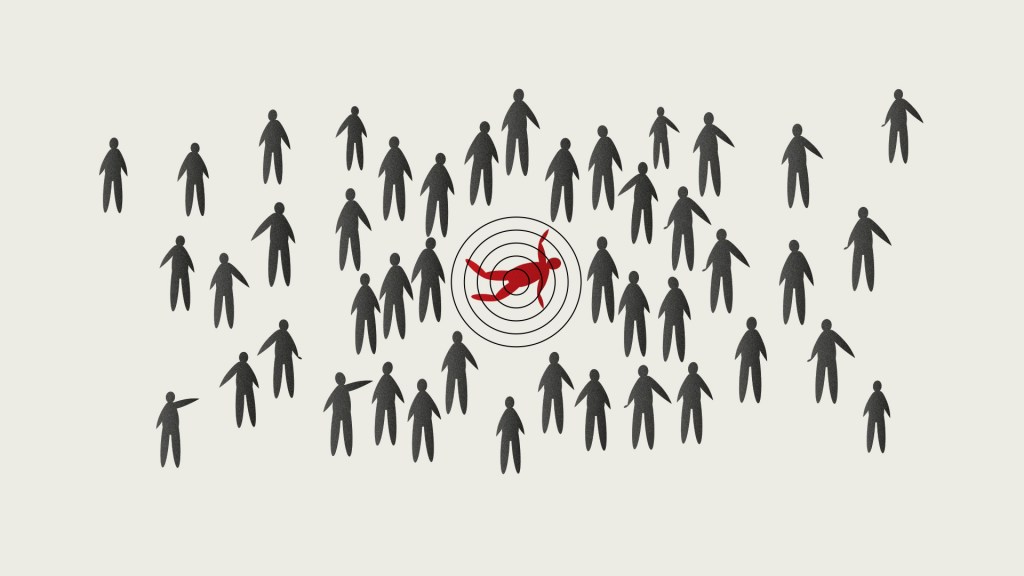
It’s 1964, and the murder of Kitty Genovese has shocked New York City. But what made the story infamous wasn’t just the tragedy of her death; it was the reports that dozens of neighbors heard and even witnessed parts of the attack, yet none intervened until it was too late. Later accounts revealed fewer direct witnesses than initially claimed, but the case sparked a wave of psychological research into a deeply unsettling question: Why do people sometimes fail to help when part of a crowd?
The bystander effect
The answer lies in what psychologists call the Bystander Effect – which attempts to explain how human behavior can drastically change in groups.
The Bystander Effect describes the tendency for people to be less likely to offer when in an emergency when others are present. When we’re in groups, we often tend to freeze or wait for someone else to take the lead rather than rushing in and helping. From personal experience, it isn’t due to a lack of caring, more so that my sense of responsibility seems to become diluted because of the presence of others. This idea has negatively impacted my own self-image. I want to believe that I would act courageously and rush into help in a crisis, but my own memories and research show a similar result: in moments of uncertainty, we tend to remain silent.
So why does this happen? I already mentioned an explanation, but researchers usually identify two other forces in play.
- Diffusion of Responsibility
- When a lot of people are present, as I mentioned, each person feels less personally accountable. If we tell ourselves that “someone else will handle it”, eventually none of us are moved to act at all.
- Pluralistic Ignorance
- Just as we tell ourselves “someone else will handle it”, we look to others for cues. If we all tell ourselves this at the same time and see that nobody else is reacting, it’s easy to assume that we don’t actually need to do anything, leaving us stuck in inaction.
- Fear of Judgement
- It might seem funny, but in a lot of situations being the first to go out and help might feel risky. What if you misread the situation? Or even embarrass yourself? This fear of social awkwardness can sometimes outweigh the impulse to act.
These forces tend to work together and create a psychological trap. We find ourselves stuck in a waiting game, seeing who will move first, leaving us in nothing but collective paralysis.
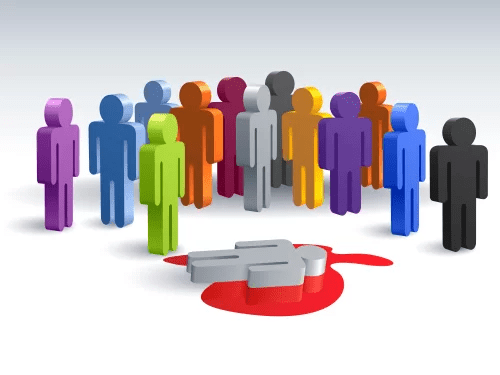
The first systematic study of the Bystander Effect took place in the late 1960s by Bibb Latané and John Darley. In the seizure study, participants were told they were part of a group discussion via intercom. When a “participant” (an actor) pretended to have a seizure, 85% of people who thought they were alone rushed to help (I’m actually surprised this percentage wasn’t higher). However, when they were told four others were listened too, only a shocking 31% intervened.
In the smoke-filled room experiment, subjects sat in a room filling with smoke. When alone, only 75% reported it. When surrounded by confederates who ignored the smoke, only 10% took action. This simulation shows how obvious it is that sometimes we may even be prioritizing the opinions and actions of others rather than our own personal safety or beliefs. The presence of other people completely reduced the likelihood of individual action.
So we’ve seen that these studies are decades old, but it’s pretty clear that these are still very much relevant in the modern era. Multiple videos taken of public emergencies capture large crowds watched, recording, and even laughing during violent incidents rather than helping. Or think of harassment in the workplace. Thousands of employees witness bullying and unethical behavior daily but assume someone else will eventually report it. And the digital age hasn’t erased the bystander effect either – many watch others being cyberbullied on social media and fail to step in for a multitude of reasons. Social media has only amplified the bystander effect, providing an endless amount of opportunities to spectate without intervening.
OVERCOMING
The best way to avoid feeling frozen in a critical situation is to train yourself and be primed to act differently. Even just knowing about the bystander effect makes us more likely to resist it. Keeping in mind the trap that it puts us in helps us to break it. Another important realization is to directly assign responsibility. Even pointing at someone else and asking them to call 911 reduces the diffusion of responsibility and spurs action. In addition, programs like first-aid training or active bystander workshops gives us tools and the courage to step in, lowering fear of judgement.
What I feel is the most important is to realize that inaction has consequence. Even more than just what may happen to the victim. Reminding yourself of your own moral compass and what you want to do helps you take a big push past hesitation.
Remember, when responsibility becomes personal, action follows.
Broader lessons
I feel that in my research I’ve learned that the bystander effect doesn’t just reveal how we act in emergencies, but also teaches us about human nature and morality in everyday life. In my readings on sociology, I’ve learned of the “path of least resistance”- where we avoid standing up or calling out things we know are wrong, like a racist joke, to avoid negative feedback or making others uncomfortable. Silence in a situation like this isn’t usually due to malice, but rather psychological inertia. The fear of judgement or how others may view us often trumps what we really believe.
This passivity has consequences. Every time we wait for someone else to step in, the burden just becomes heavier on the victim. And every time we rationalize our cycle (the path of least resistance), we reinforce that cycle.
Redefining what it means to be “just one person” helps us break that cycle. Often, it just takes one person’s choice to unfreeze a crowd.
And so looking back at the story of Kitty Genovese, whether fully accurate in its original reporting or not, forced psychology to confront a grim truth: people are not always the heroes that they may imagine themselves to be. But understanding this is power. Recognizing the bystander effect allows us to see the invisible forces that keep us silent, and to resist them.
So the next time you might find yourself in a crowd, faced with someone in need, ask: If not me, then who? That simple question might be enough to tip the balance from hesitation to action.
 ElysianState
Leave a comment